Stress-test your filing before opposing counsel does.
Upload the draft and the papers it answers. Three adversaries attack it, and you get one memo on what to fix.
You cannot read your own brief cold.
By the time a draft is ready, you know what every sentence is meant to say. The other side reads only what it does say. They find the hedged line in the declaration, the case that holds less than the brief claims, and the argument from their motion that your opposition never answered.
The judge finds the same things, often at the hearing, when it is too late to fix them.
Adversary reads it the way they will.
Three adversaries take your filing apart. Opposing counsel argues from their own papers. A judge who has read both sides asks what the bench would ask at the hearing. A procedural reviewer works the local rules and the California Rules of Court.
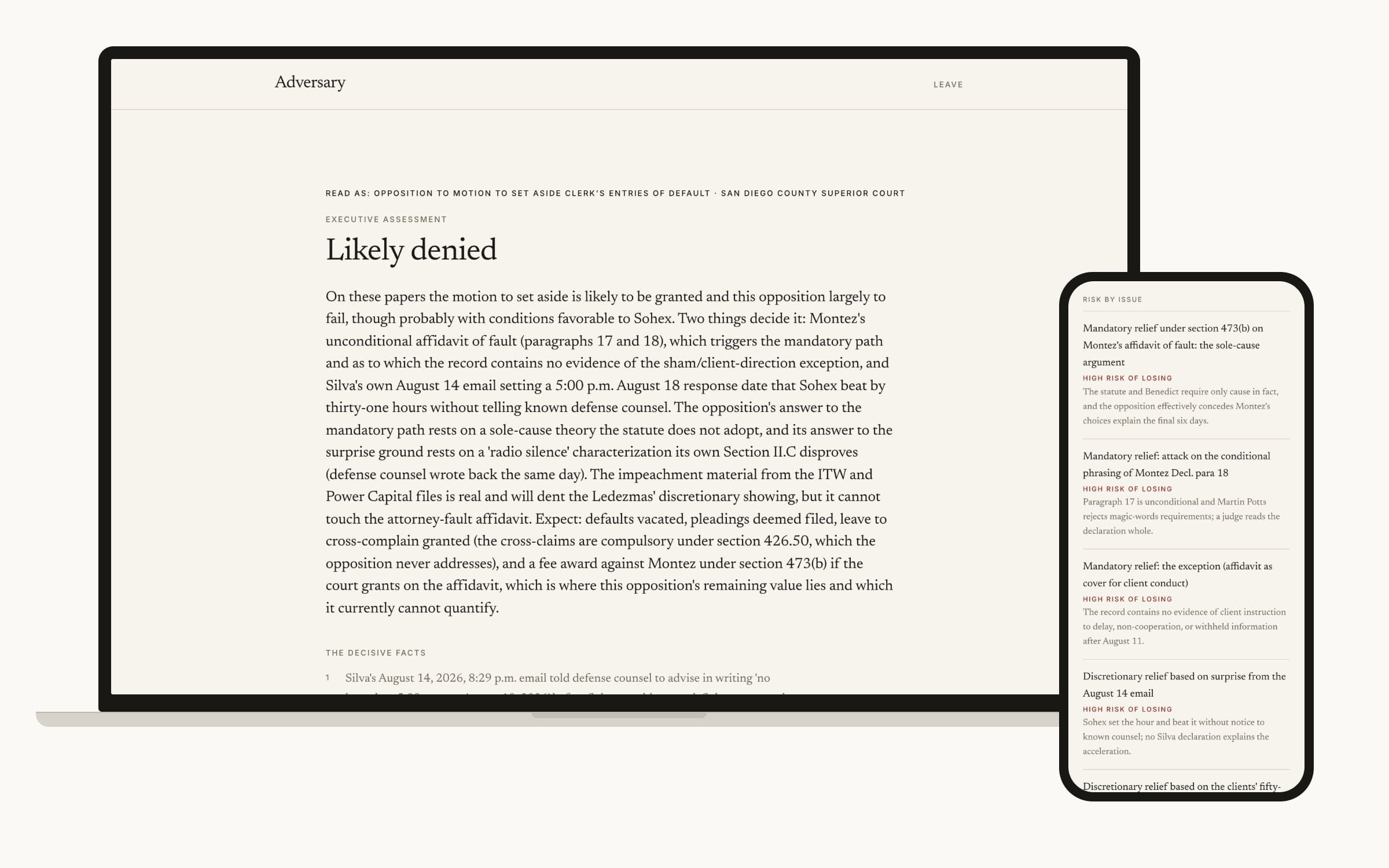
Every citation is checked against its source. You get one memo: who wins on these papers, what to keep, what loses the motion, what the record is missing, and what the other side files next.
From the upload to the memo.
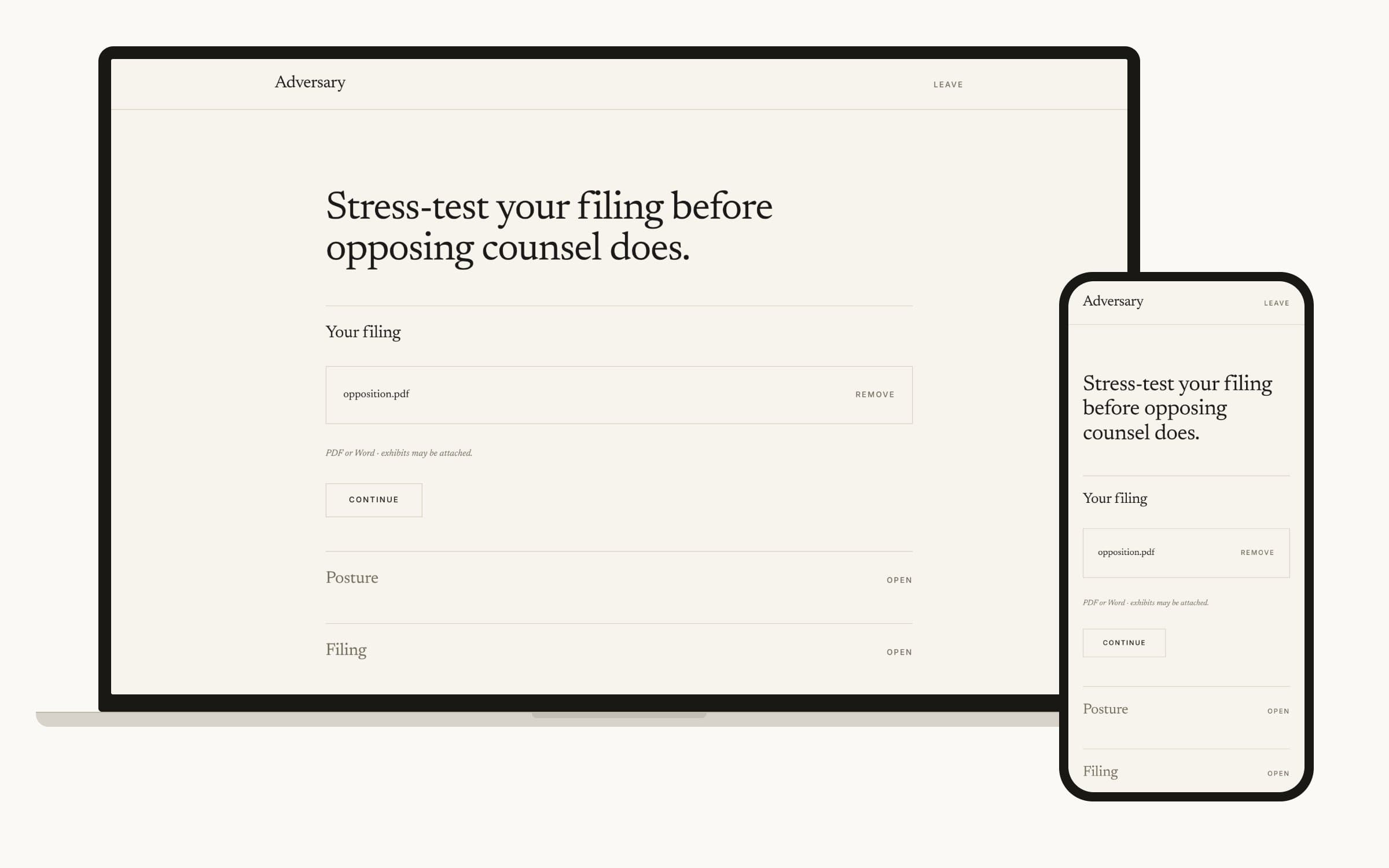
First the upload. You add the draft as PDF or Word, and the papers it answers if there are any. Each file is held in temporary storage only until the run reads it, and is deleted before analysis begins.
Then the reading. Adversary separates the brief from its exhibits and keeps the declarations filed with it. Cases are checked against the opinion text on CourtListener, and California statutes against the Legislature’s published text.
Then the adversaries, each paid to make the filing lose. None of them compliments the writing.
Last, the memo, as a PDF. It opens on the verdict, likely granted, at risk or likely denied, with the facts that decide it and the risk on each issue. A stress test takes about four to six minutes.
For California litigators in solo and small firms.
For the lawyer who drafts the opposition and argues it, with no one down the hall to read it first. Local rules are loaded for the San Diego, Orange, Riverside and Los Angeles superior courts and the Southern District of California.
$29 a run.
A stress test is $29 a run. A seat is $79 a month and covers up to 25 stress tests.